%2F&w=3840&q=75)
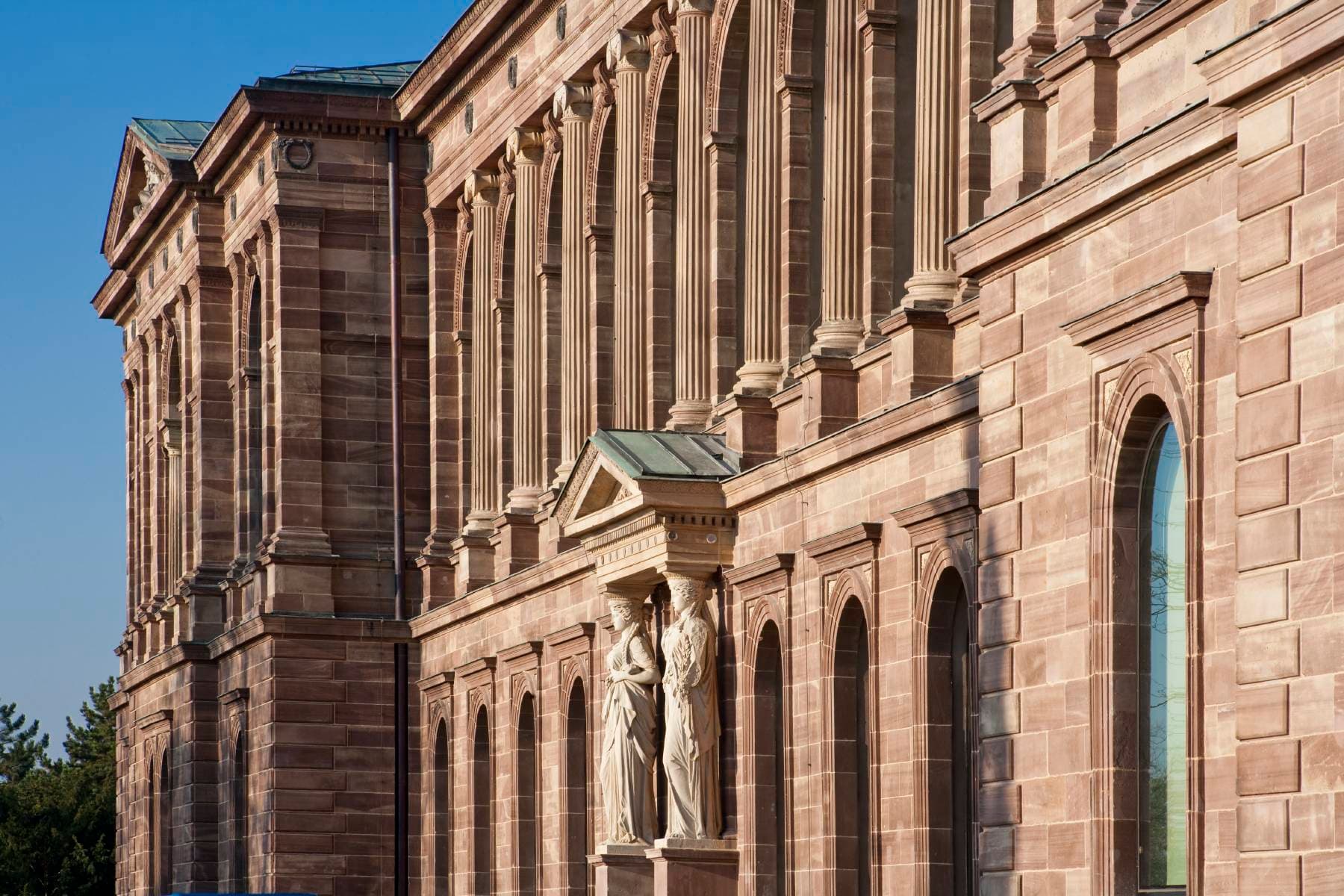
The historical building of the Neue Galerie was initially an exhibition space for not so "new" artworks: From 1871, the house at the Karlsaue was established as a "painting gallery" for the Kassel collection of "Old Masters". After the Second World War, this art collection moved to the Wilhelmshöhe Palace because large parts of the gallery building were destroyed.
In the 1960s and 1970s, the building was extensively renovated with the plan to establish a large collection of modern and contemporary art here. Parts of documenta 3 were already held in some provisionally reconstructed rooms in 1964. Since then, the building has repeatedly served as a temporary exhibition space for the major international art show.
In 1976, the museum reopened - fully renovated and with a new concept - as the "New Gallery". The exhibition included works from city and state collections: paintings from the 18th and 19th centuries, major works of German Impressionism, and pieces from the Classical Modernism. There was also a sculpture gallery featuring pieces from the 18th to 20th centuries, as well as a collection of contemporary art. One of the highlights to this day is an exhibition room personally set up by Joseph Beuys.
Since the 1980s, the collection has been constantly supplemented and expanded, especially with contemporary works and acquisitions from documenta. In 2011, the Neue Galerie was completely renovated and modernized. This resulted in an open, bright museum building with significantly more space.
%2F&w=3840&q=75)
%2F&w=3840&q=75)
%2F&w=3840&q=75)
%2F&w=3840&q=75)
%2F&w=3840&q=75)
%2F&w=3840&q=75)
%2F&w=3840&q=75)
%2F&w=3840&q=75)